Timeline: How the COVID-19 pandemic has unfolded in Malaysia since January 2020
Advertizement
Asia
Timeline: How the COVID-19 pandemic has unfolded in Malaysia since January 2020
After more 18 months since Malaysia saw its kickoff coronavirus example, the caseload has stayed high in many areas while lockdowns have been extended repeatedly. CNA looks at some of the milestones.

A soldier wearing personal protective equipment disinfects an area under enhanced lockdown in Kuala Lumpur, Malaysia on Jun 29, 2021. (Photo: Reuters/Lim Huey Teng)

KUALA LUMPUR: Malaysia's COVID-19 cases crossed the 1 million mark on Jul 25.
Equally cases rose, the country repeatedly reported unmarried-day records of new infections and fatalities.
Since the motion control order (MCO) was get-go imposed in March 2020, Malaysians have been through different phases of lockdown as the regime grappled with the spread of COVID-xix.
Here'southward a recap of how the outbreak has evolved in the country so far:
2020: FIRST CASES EMERGE, MCO 1.0 CURBS Manual
Malaysia detected its beginning 3 COVID-19 cases on January 25, 2022 - three Chinese nationals from Wuhan who entered the state from Singapore.
The first wave of infections in Malaysia, from Jan 25 to February 15 last yr, encompassed 22 cases. It was dealt with fairly quickly, through immediate isolation of the patients and treatment.
A major challenge came in the course of a mass religious gathering which was held at the Sri Petaling mosque nigh Kuala Lumpur from February 27 to Mar 1.
The event, attended by 16,000 people, somewhen triggered a wave of COVID-19 infections across the country and formed what was dubbed the tabligh cluster. The attendees who contracted the virus during the outcome brought it back home to their respective states, resulting in a fasten in infections nationwide.
The Perikatan Nasional government, which had just taken over federal administration from Pakatan Harapan, so imposed a lockdown dubbed move control order in mid-March, closing its borders and banning interstate travel.
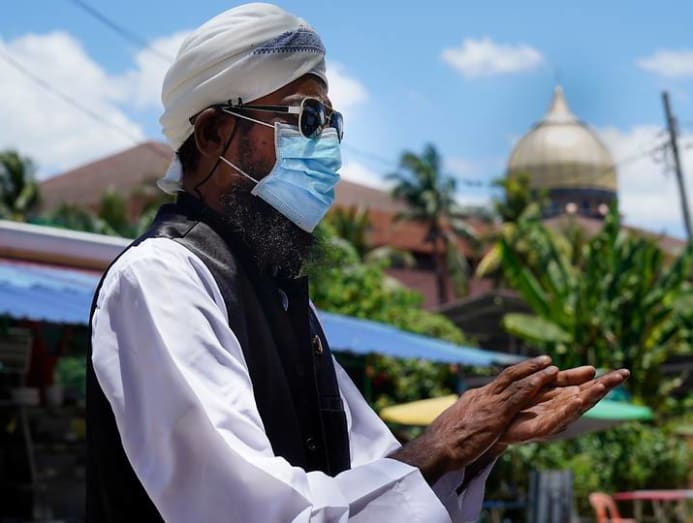
The motion to act chop-chop and restrict people's motility with strict protocols were key in halting the spread of infections.
Daily number of cases sank to unmarried-digit figures in July and August. On Jul ane, Malaysia recorded zero local transmission for the outset time since March. By the end of August, Malaysia had less than 10,000 cumulative cases, one of the lowest in the region.
But the tertiary wave started in September through the Sabah state election. Later the state polls, cases spiked and eventually hovered at four-digit figures daily.
Prime Government minister Muhyiddin Yassin acknowledged that in spite of strict health protocols set by the Election Commission, compliance was very weak.

He noted that the number of cumulative cases in Sabah, which was 808 on nomination 24-hour interval on Sept 12, jumped by 91.5 per cent to 1,547 cases on polling twenty-four hours on Sept 26.
One month later on Oct 24, Sabah's cumulative cases were 11,285.
Over at the peninsula, clusters too started forming amongst workplaces and dormitories of strange migrant workers in the Klang Valley.
Glove maker Height Glove made global headlines after the Malaysian government appear that it opened 19 investigation papers into vi subsidiaries of the company over offences involving workers' dormitories.
2021: STATE OF EMERGENCY, MCO 2.0
The fasten in infections across the country led Mr Muhyiddin to seek a state of emergency to exist imposed in the country.
On Jan 12, with the national tally surpassing 138,000 and the healthcare system said to be at a breaking point, Malaysia's king proclaimed a state of emergency until Aug 1.
During the catamenia, the parliament and state legislative assemblies would non sit until a time decided by the king. No elections were allowed to be held.
In a renewed effort to combat the alarming rise in COVID-xix cases, the regime announced that all states, except for Sarawak, would exist placed under MCO.
Unlike the first MCO which was implemented in March 2020, the restrictions imposed under MCO 2.0 were seen as beingness more lenient.
MCO ii.0 saw more economical sectors allowed to continue functioning, such every bit the automotive sector and retailers similar gold and jewellery shops. Residents could also dine in at restaurants and visit night markets.
VACCINATION DRIVE KICKS OFF
In February, Malaysia kicked off the national COVID-19 immunisation programme, with Mr Muhyiddin, Health Ministry director-general Noor Hisham Abdullah and other medical frontliners existence the offset to receive doses of the Pfizer-BioNTech vaccine.
Malaysia's COVID-19 immunisation programme was divided into three phrases, beginning with medical and non-medical frontliners from Feb to April.
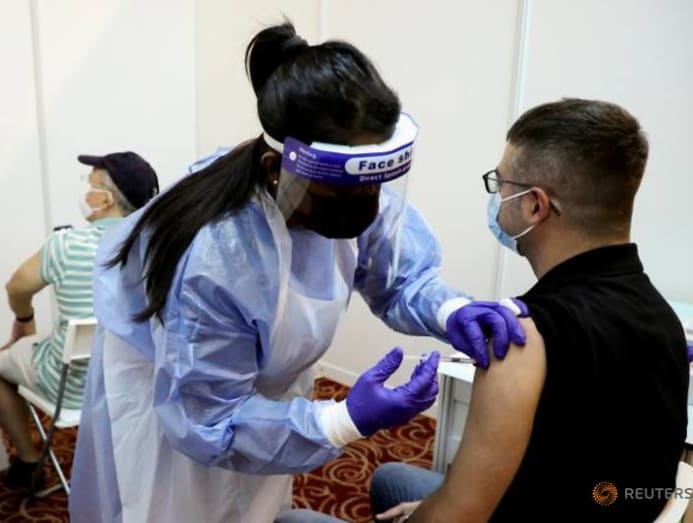
The government said Malaysia aimed to reach herd immunity by having eighty per cent of its 32 1000000 population vaccinated at the stop of the twelvemonth, or by February 2022 at the latest.
Even with MCO 2.0 in place, the number of cases continued to surge, reaching an all-time high of v,728 daily on Jan thirty.
The daily number later dipped, and Malaysia recorded 2,176 cases on Feb xv, the everyman tally for more than a month.
Shortly afterwards, Malaysia announced that it would ease COVID-nineteen restrictions across the country.
NATIONWIDE MCO Over again
During the holy month of Ramadan, the government had initially allowed hotels, restaurants and eateries to concord buffets for the breaking of fast, with strict compliance to the standard operating procedures.
Ramadan bazaars were also allowed to operate in almost areas of the country.
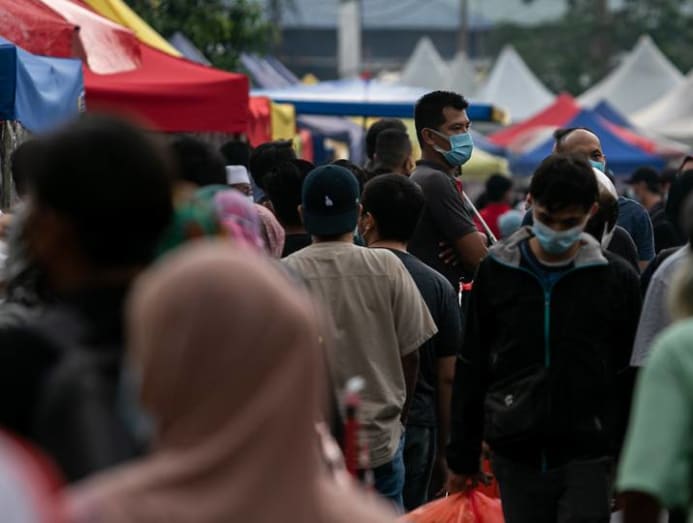
Simply when the number of daily cases increased apace, the government announced that six Selangor districts, Kuala Lumpur and three districts in Johor were placed under MCO again nearly a week leading upwardly to Hari Raya Aidilfitri,
This meant that dining in were no longer immune at restaurants, Ramadan bazaars were closed and interstate travel remained barred.
On May 10, the authorities announced another nationwide MCO from May 12 until Jun 7, in what Mr Muhyiddin described every bit a "drastic motility to foreclose the country from slipping into a astringent wellness catastrophe".
The government had decided to take stricter steps to curb the spread of COVID-xix in the community and to forestall cases from rising sharply.
"Data and science continued to evidence that assembly activities that made social distancing difficult and the presence of people in congested spaces are major causes of COVID-xix transmission," he said.
Under MCO 3.0, all forms of social gatherings including weddings, house visits and banquets were prohibited. However, all economic sectors were immune to operate during the flow.
Total LOCKDOWN
With the number of cases continuing to surge and pressure from opposition politicians too as netizens to act, Mr Muhyiddin announced that a "total lockdown" would be implemented across the land, endmost all economic and social sectors.
The first phase of the lockdown was scheduled to last from Jun i to Jun fourteen. Only essential economic and service sectors listed by the National Security Council would be allowed to operate during phase one of the lockdown.
He also unveiled a four-phase National Recovery Plan, charting Malaysia's journeying out of the pandemic.
He described the electric current lockdown as the first phase of the exit plan, and outlined that vaccination charge per unit, daily cases and the public healthcare system's chapters are the key thresholds in determining the transition.
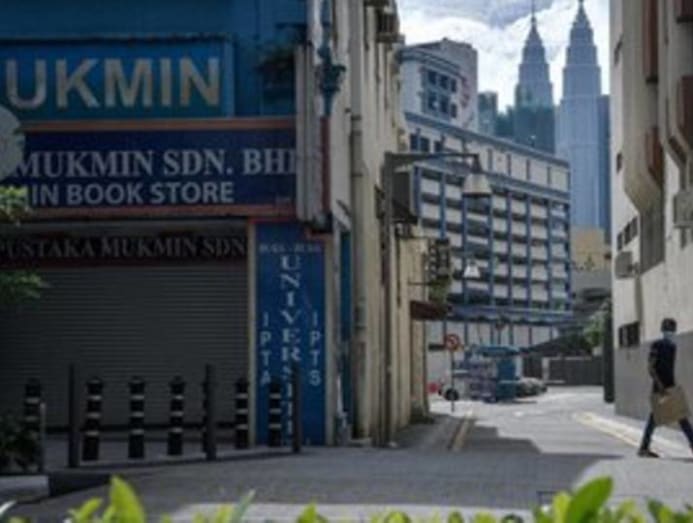
Withal, equally daily case numbers still exceeded v,000, the lockdown was extended for two weeks from Jun 15 until Jun 28.
By end-June, Mr Muhyiddin confirmed that phase 1 would be further extended until daily cases roughshod beneath iv,000.
SITUATION WORSENS IN KLANG VALLEY
In early on July, Mr Ismail Sabri Yaakob, who was then senior minister for defence, announced that five Malaysian states would transition into phase ii of the national recovery program. These states were Kelantan, Terengganu, Perak, Pahang and Perlis.
Finance minister Tengku Zakrul Tengku Abdul Aziz explained that parameters for transitioning into the various phases of the national-level recovery plan would now be practical at the state level.
This, he said, would allow individual states to transition before, as their local numbers had already shown bully improvement, rather than wait for the national boilerplate to be attained, which might take longer.
Meanwhile, the state of affairs in populous Klang Valley worsened. Equally nationwide infections persisted above five,000 daily, more than than half of these were frequently contributed by cases in Selangor and Kuala Lumpur.
This led the Malaysian regime to implement an enhanced movement control guild (EMCO) in many parts of Selangor and Kuala Lumpur for a period of 14 days from Jul three to Jul 16.

EMCO restrictions meant that residents living in these areas cannot exit abode subsequently 8pm, while only one person per household is allowed to run errands.
Simply residents who work in essential services, or part of official government duty with appropriate documentation, were allowed to travel to work.
Moreover, only factories manufacturing food and daily essential items, including rice, bread, sugar, oil, milk and medication were allowed to operate while all restaurants, nutrient courts, shops and street vendors could simply open from 8am to 8pm.
The authorities emphasised that these measures were necessary taking into account the population density of these areas and the fast spread of the Alpha, Beta and Delta variants.
The EMCO curbs were subsequently lifted ahead of schedule for Kuala Lumpur and as scheduled for Selangor, despite the fact that these areas remained the epicentre of the latest wave of infections.
Malaysia's 2022 key COVID-19 milestones at a glance
Jan 12: Rex proclaims state of emergency
February 24: National immunisation programme kicks off
Mar 29: Daily new infections autumn below 1,000 for the beginning time in 2021
May x: Motility command gild is appear for the whole country
May 22: Total COVID-19 cases breaches 500,000-marking
Jun 1: Kickoff phase of total lockdown begins
Jun 28: Total deaths crosses 5,000-mark
Jul 5: Kelantan, Terengganu, Perak, Pahang and Perlis enter phase two of national recovery plan
Jul 25: Total COVID-19 cases surpasses 1 million
Jul 26: Parliament meets for the outset time in 2021
Aug 1: Land of emergency ends
Aug 4: Perlis, Sarawak and Labuan enter phase iii of national recovery plan
Collapse
PARLIAMENT RECONVENES ON JUL 26
In spite of the measures in the Klang Valley, widespread testing has unveiled a loftier volume of COVID-xix cases.
Daily caseload reached five figures for the first time on Jul 13 with 11,079 new infections, and more than half of the new cases were detected in the Klang Valley.
Following the king's decree, the House of Representatives met for the first fourth dimension in 2021.
During the special parliamentary meeting from Jul 26, the prime government minister and other ministers briefed the MPs on the country's COVID-19 response.
In his presentation, Mr Muhyiddin said nearly Malaysian states are likely to move into phase four or the last phase of the country's COVID-19 go out strategy by Oct at the earliest.
Mr Khairy Jamaluddin, coordinating minister for the immunisation programme, said 25.2 per cent of the developed population are fully vaccinated as of Jul 27.
The meeting was supposed to last for five days, just was cut short to 4 days after COVID-19 cases were detected in the parliament.
The state of emergency has ended on Aug 1 as scheduled. The motion to debate and annul the emergency ordinances would be tabled in the parliament in September, following different interpretations over the king's function in the process.
On Aug iv, Malaysia hit another tape high for new COVID-19 cases with 19,819 infections, taking the national total to 1,183,110.
Daily fatalities likewise hit a new high at 257 on the aforementioned 24-hour interval. There have been more than ix,800 deaths and so far.
Daily infections continued to set new records for 2 more days. On Aug half-dozen, Malaysia reported 20,889 new COVID-nineteen cases.

Contempo Searches
Trending Topics
Source: https://cnalifestyle.channelnewsasia.com/asia/timeline-how-covid-19-pandemic-has-unfolded-malaysia-january-2020-289286

Post a Comment for "Timeline: How the COVID-19 pandemic has unfolded in Malaysia since January 2020"